
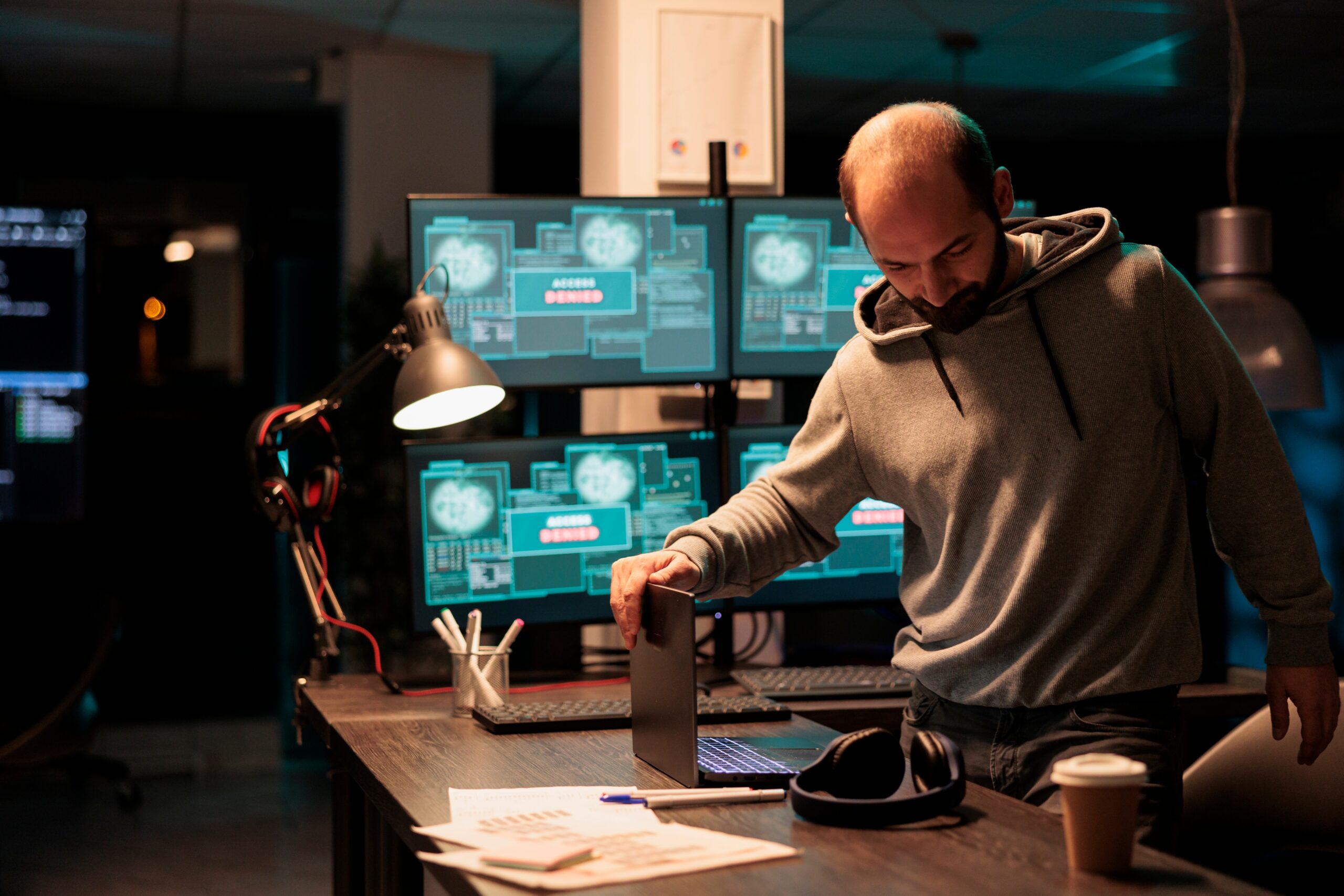
When your office closes for the night, your responsibility for the data inside it doesn’t. Attackers know this, and they often strike when the fewest people are watching.
For organisations in regulated sectors such as healthcare, legal, financial services, and not-for-profit, which hold some of the most sensitive data in the country, round-the-clock threat intelligence closes the gap between the end of the workday and the start of the next.
That gap in visibility is exactly where 24/7 threat intelligence earns its keep.
The threat is real, and it doesn’t clock off
According to the Office of the Australian Information Commissioner’s 2025–26 Annual Report, health service providers topped the list of privacy complaints for the year, with 684 complaints logged – more than any other sector. Finance, including superannuation, came next with 507 complaints, and the Australian Government recorded 461.
The same report shows an even starker pattern in actual breach notifications. Health service providers led all sectors with 275 data breach notifications in a single financial year, nearly double the next highest sector. Finance and superannuation recorded 130 notifications, and legal, accounting, and management services reported 70.
Read together, these figures tell a consistent story: the organisations holding the most sensitive information are also carrying the greatest exposure. For many of these organisations, cybersecurity investment still lags behind the scale of that exposure. And the mismatch tends to show up exactly when it’s least convenient.
The Australian threat landscape: who is being targeted?
It’s not a coincidence that healthcare, finance, and legal services consistently appear near the top of breach statistics. These sectors hold data that’s difficult or impossible to replace – a patient’s medical history or a client’s financial records can’t simply be reissued the way a stolen credit card number can.
This high value makes regulated organisations attractive, persistent targets rather than opportunistic ones. As we’ve explored in Why Australian healthcare is a prime target for cybercrime, attackers tend to concentrate their efforts where the payoff is greatest, and the defences are most likely to lag.
What is 24/7 threat intelligence, and why does it matter?
Cyber threat intelligence is the practice of collecting, analysing, and acting on information about potential and emerging threats before they cause harm. As Microsoft explains, it gives security teams a comprehensive view of the threat landscape so they can make informed decisions about preparation, detection, and response, rather than simply reacting after the fact.
Huntress describes threat intelligence as information about attacks happening right now, how attackers operate, and what risks are on the horizon. It gives organisations the context to see what’s approaching and act before an attack causes damage. That’s why the ‘24/7’ part matters. Intelligence needs to reflect a threat landscape that is constantly changing, because a threat assessment conducted once a quarter tells you very little about what’s happening in your systems right now.
This is where round-the-clock monitoring changes the equation. Attackers frequently probe networks slowly and quietly, sometimes over weeks or months, before acting. Microsoft recently outlined this challenge in its discussion of turning threat intelligence into decisive action, describing the ‘intelligence-to-action gap’ (the space between knowing a threat exists and actually acting on it) as the point where most breaches are won or lost. Closing that gap requires expertise that’s watching continuously, not periodically.
We’ve covered a related angle in Medical cyber defence: why 365-day data retention matters – if your monitoring only looks back 30 days but an attacker has been present for 120, you lose the ability to trace how, when, and where they got in.
The business case: what does inaction really cost?
It’s worth asking a different question than ‘What does 24/7 monitoring cost?’ The more useful question is: ‘What does the absence of it cost?’
Beyond the direct financial penalties tied to a breach, regulated organisations face disrupted service delivery, reputational damage, and the time and resources needed to investigate and report an incident properly. Underinvestment in IT infrastructure tends to surface as a much larger cost down the track, often at the worst possible moment.
Continuous threat intelligence doesn’t eliminate risk entirely. No solution does. But it meaningfully shortens the distance between something going wrong and someone noticing.
Compliance is not optional: it’s a legal obligation
For organisations in healthcare, finance, legal, and the not-for-profit sector, data protection isn’t just good practice; it’s a legal requirement. Meeting a compliance checklist and maintaining genuine, ongoing security are two different things. A point-in-time audit can confirm you met a standard on the day it was checked. It can’t confirm your systems are being watched every day in between.
Closing the gap, day and night
In summary, organisations that hold sensitive data under regulatory obligation are simply higher-value targets, and the data backs that up clearly. Twenty-four-hour threat intelligence gives these organisations a way to match that reality: continuous visibility, earlier warning, and a faster path from detection to action.
If your organisation hasn’t reviewed how your current monitoring works outside business hours, now is a reasonable time to ask. Get in touch with the Ozdoc Solutions team to talk through what round-the-clock threat intelligence could look like for your practice or organisation.